
 11
11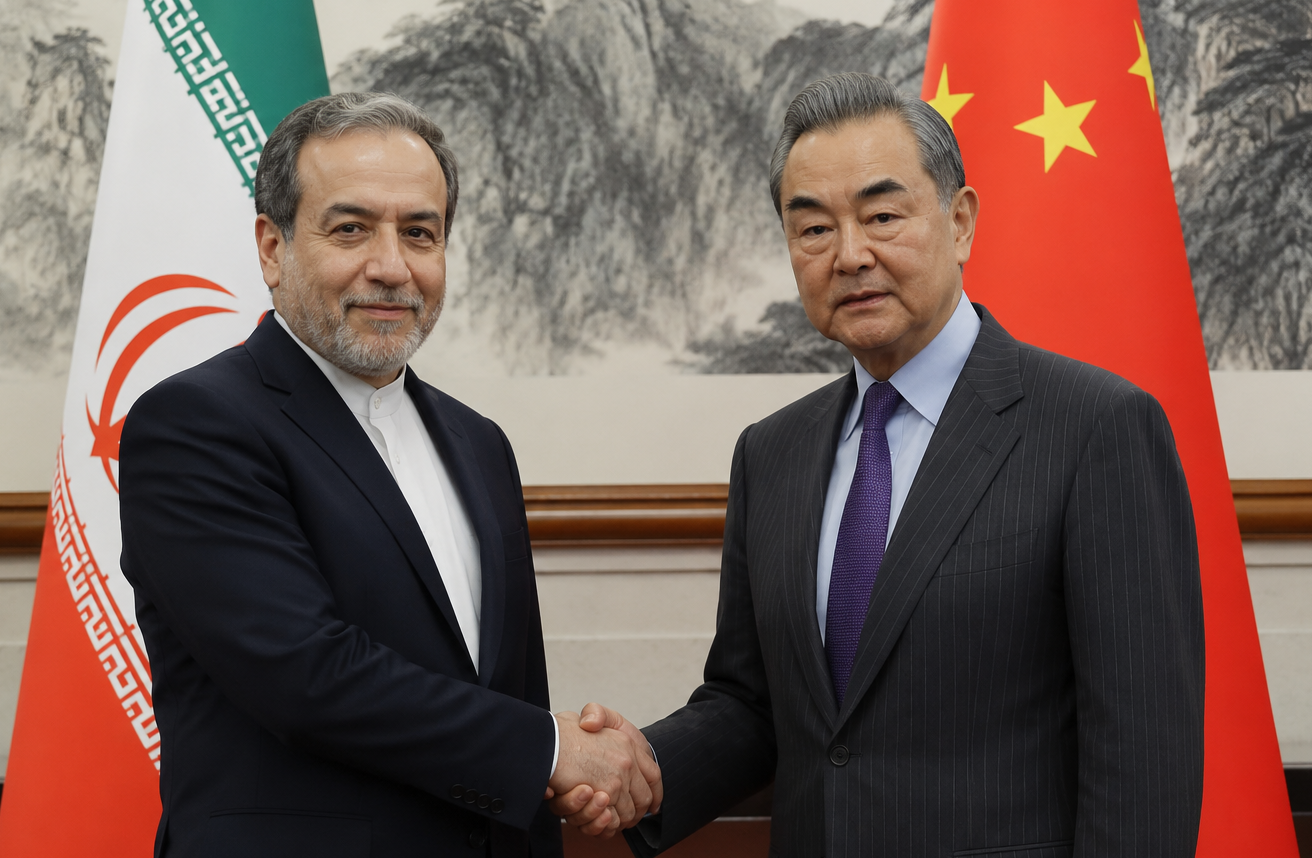
Iranian Foreign Minister Abbas Araghchi touched down in Beijing on Wednesday for high-stakes diplomatic talks with Chinese Foreign Minister Wang Yi, as international efforts to broker an end to the escalating conflict between Tehran and Washington gained fresh momentum.
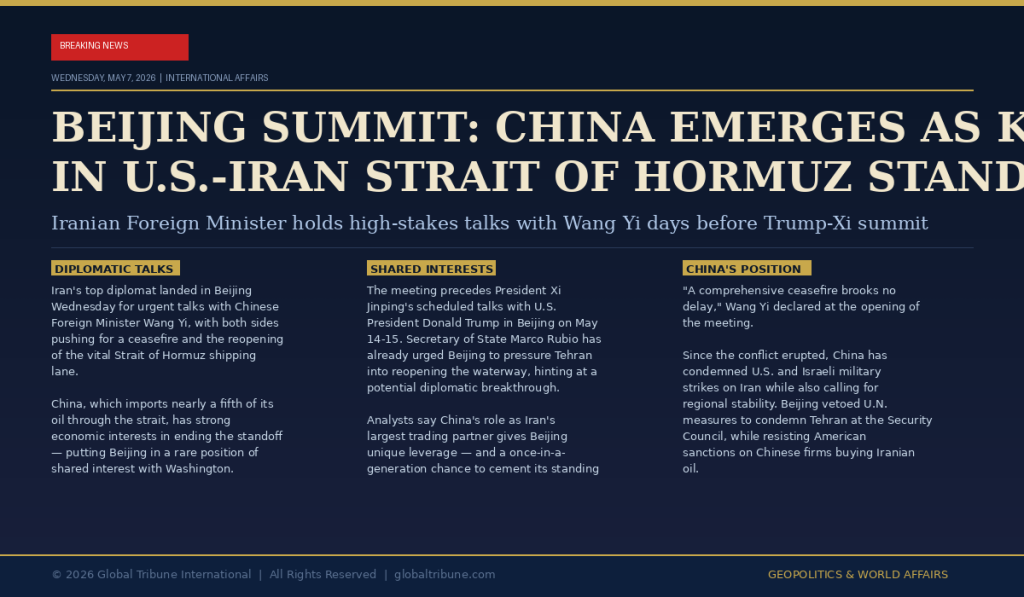
The visit came just days before U.S. President Donald Trump is scheduled to meet Chinese President Xi Jinping in the Chinese capital on May 14 and 15 — a summit analysts say could prove decisive in shaping a long-term resolution to the crisis.
“A comprehensive ceasefire brooks no delay,” Wang Yi declared at the opening of the bilateral meeting, signaling Beijing’s growing urgency to stabilize the conflict before it further rattles global energy markets.
At the heart of the standoff lies the Strait of Hormuz — a narrow but strategically critical waterway through which approximately one-fifth of the world’s oil and natural gas supply travels daily. Since hostilities between Tehran and Washington escalated, Iran moved to restrict commercial shipping through the passage. Washington responded by imposing its own blockade on Iranian ports following an April ceasefire, in a bid to force Tehran to the negotiating table.
The resulting disruption has sent shockwaves through commodity markets, driven fuel prices higher across the Western world, and squeezed energy supplies flowing to East and Southeast Asia — a pressure point felt most acutely in Beijing.
China finds itself in a uniquely powerful diplomatic position. As Iran’s largest trading partner and the primary buyer of its oil exports — often purchased at discounted rates in defiance of U.S. sanctions — Beijing holds economic leverage over Tehran that no other world power currently possesses.
The two nations formalized that relationship in 2021 through a sweeping 25-year strategic partnership covering infrastructure investment, trade, and security cooperation. Since then, Iran’s economic dependence on China has deepened significantly.
Yet China also has pressing reasons of its own to see the strait reopened. A prolonged blockade threatens the energy flows powering China’s expanding economy, disrupts Chinese trade routes across the Persian Gulf, and undermines Beijing’s credibility as a stabilizing force in global affairs.
“I think China will try its best to persuade Iran back to the negotiating table and let the Strait of Hormuz become as open as before,” said Jodie Wen, a researcher at the Center for International Security and Strategy at Tsinghua University.
According to regional analysts, Tehran’s primary objective in the Beijing talks is securing reassurances — not just about energy trade, but about China’s diplomatic posture in the critical weeks ahead.
Iranian officials are believed to be seeking Chinese backing at the United Nations to shield Tehran from additional sanctions tied to its actions in the strait. More immediately, Tehran is anxious to understand what, if any, concessions Beijing might offer Washington during the upcoming Trump-Xi summit — concessions that could shift the balance of the negotiations.
“The Iranian foreign minister is possibly in Beijing to seek clarity and reassurance that if they do choose to open the strait, Beijing will continue to support it diplomatically and at the United Nations,” said Chris Doyle, Director of the Council for Arab-British Understanding.
Meanwhile, U.S. Secretary of State Marco Rubio has openly urged China to use its influence with Iran, framing Beijing as an essential partner in breaking the deadlock — a rare moment of diplomatic alignment between two powers that have spent years in trade conflict.
Analysts are cautiously optimistic. The United States and allied Gulf nations have drafted a United Nations resolution calling for guaranteed safe passage through the Strait of Hormuz, demanding Iran halt attacks on commercial vessels, clear sea mines, and end the collection of unauthorized transit fees. The resolution has been revised specifically to attract support from both Russia and China.
If a deal can be struck, the benefits extend well beyond the two principal adversaries. A diplomatic success would elevate China’s standing among Gulf energy producers such as Saudi Arabia and the UAE, ease pressure on energy-importing nations across Asia, and potentially rescue a global economy teetering on the edge of a serious downturn.
“It would be a tremendous opportunity for China to be the broker in all of this,” Doyle told reporters, referencing Beijing’s successful restoration of diplomatic ties between Saudi Arabia and Iran in 2023. “If President Xi and President Trump can get something over the line, they can both appear as winners and help drag the global economy back from the precipice.”
Still, observers warn the path ahead is treacherous. Distrust runs deep between all parties, military assets remain deployed across the region, and any miscalculation could rapidly undo fragile progress.
The world will be watching Beijing closely when Trump and Xi sit across from each other next Wednesday.